A small home office guest room needs a desk you can use every day and a bed guests can reach without weaving around furniture. Start with the floor space each setup needs, then choose storage and lighting that work for both.
Table of Contents
- Plan the Desk and Bed Layout
- 1. Put the Desk Beside the Window
- 2. Choose a Sleeper Sofa Instead of a Full Bed
- 3. Use a Daybed With Storage Drawers
- 4. Fit a Slim Desk Against an Empty Wall
- 5. Turn a Closet Into a Compact Office
- Make Room for Work and Storage
- 6. Add Floating Shelves Above the Desk
- 7. Use a Wall-Mounted Fold-Down Desk
- 8. Choose a Nightstand That Doubles as Office Storage
- 9. Separate Work and Sleep Zones With a Rug
- 10. Add a Small Desk at the Foot of the Bed
- Get the Room Ready for Guests
- 11. Use Closed Cabinets to Hide Office Clutter
- 12. Choose Lighting That Works for Both Tasks
- 13. Add a Curtain to Conceal the Workspace
- 14. Keep Guest Essentials in One Dedicated Basket
- 15. Style the Room So Neither Function Takes Over
- Frequently Asked Questions
Plan the Desk and Bed Layout
1. Put the Desk Beside the Window
 Save
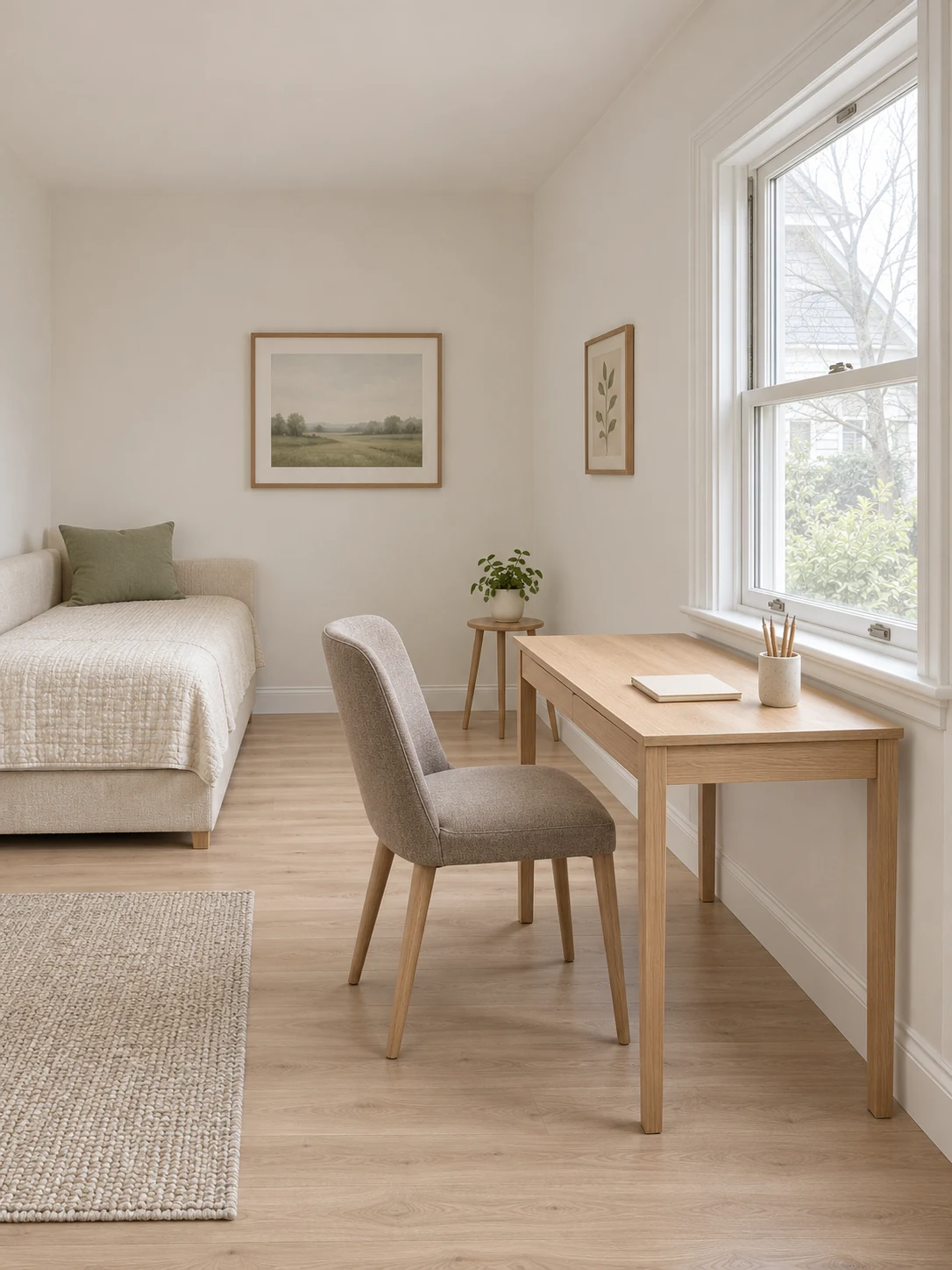
Set the desk near the window and turn the screen sideways to the glass if glare is a problem. Check that you can open the window and pull out the chair without narrowing the route to the bed.
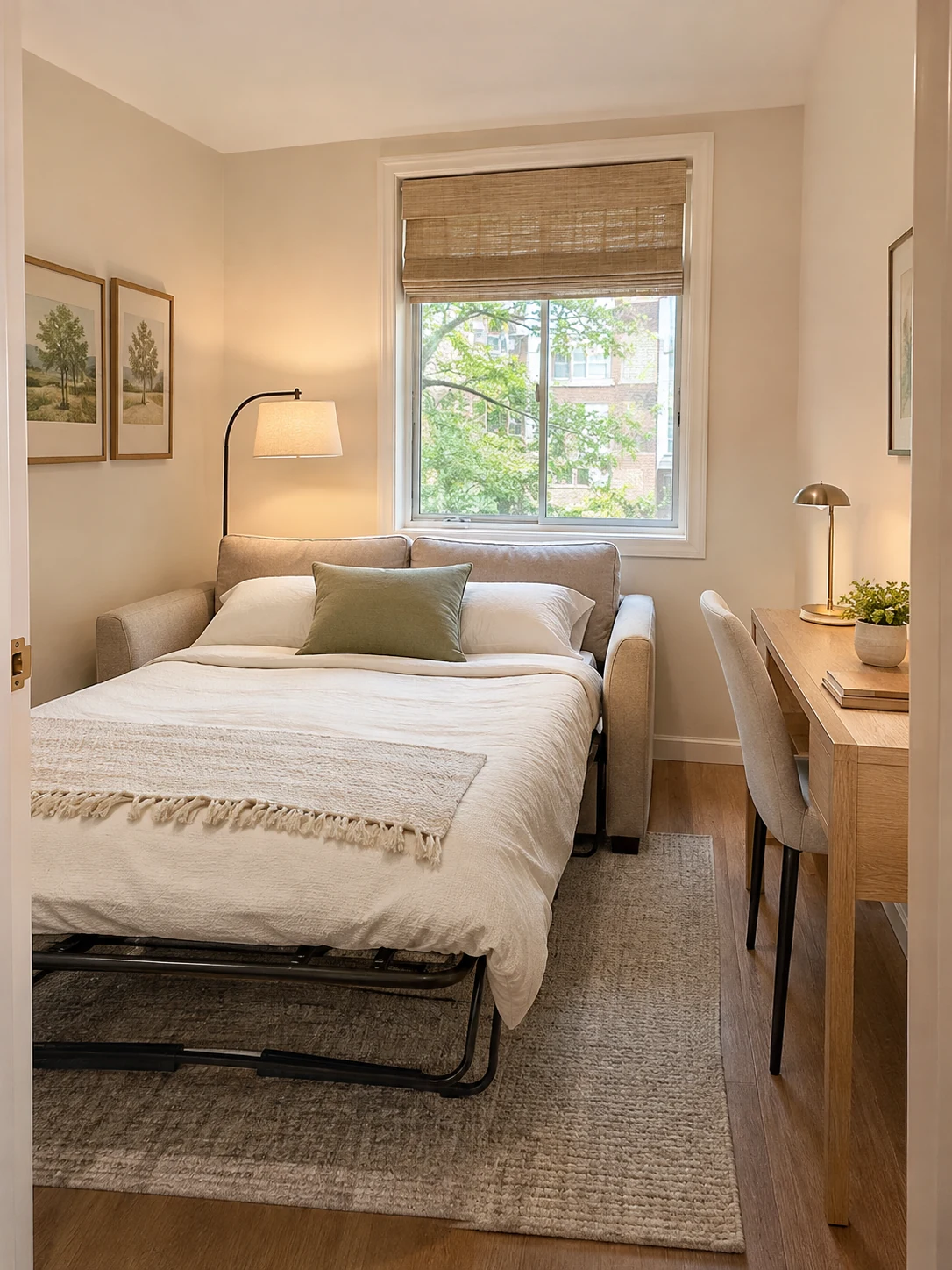
2. Choose a Sleeper Sofa Instead of a Full Bed
 Save
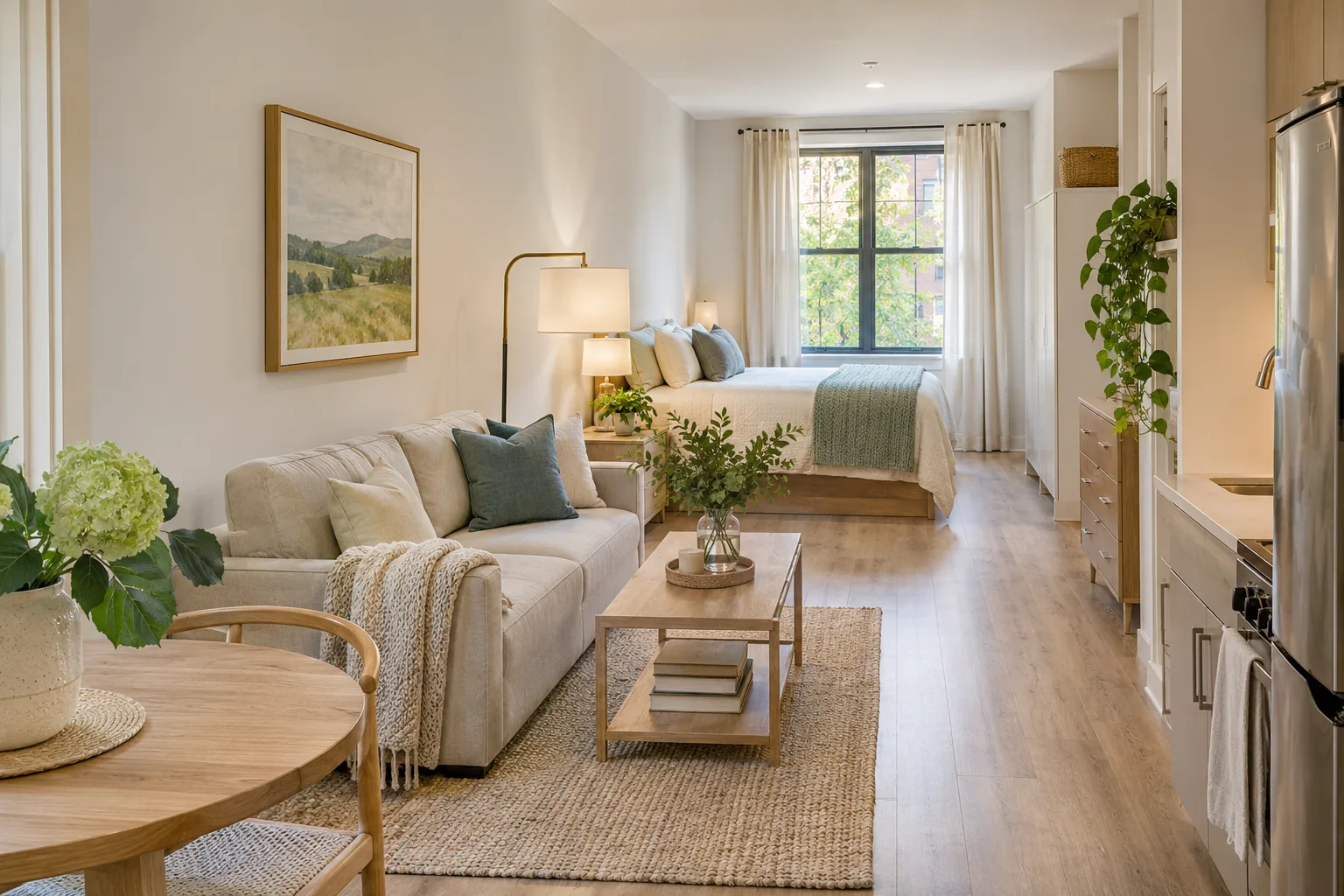
Measure the sleeper with the mattress extended before you buy it. Tape that footprint on the floor and leave a way to reach the door. Choose a side table light enough to move when guests arrive.
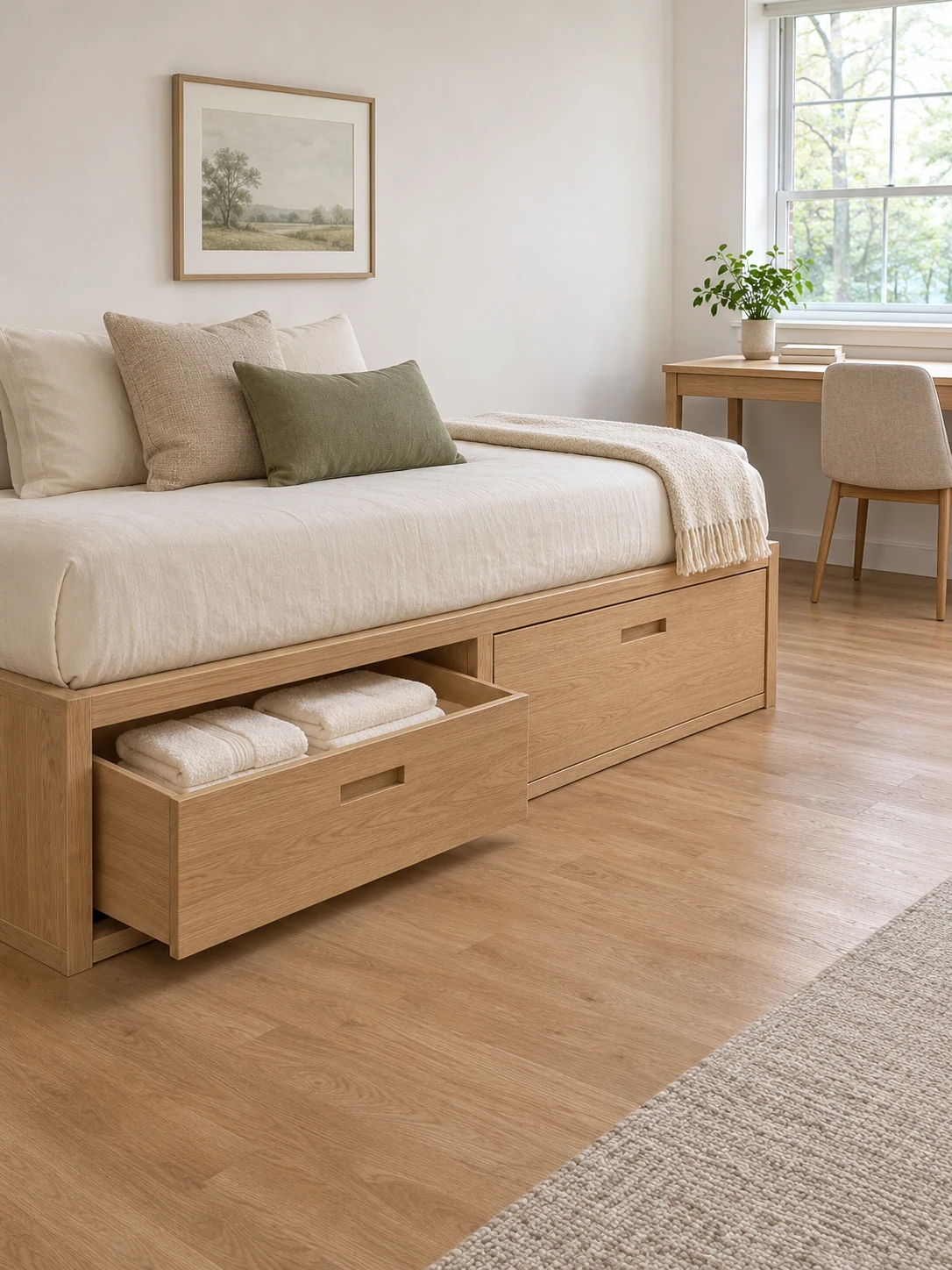
3. Use a Daybed With Storage Drawers
 Save
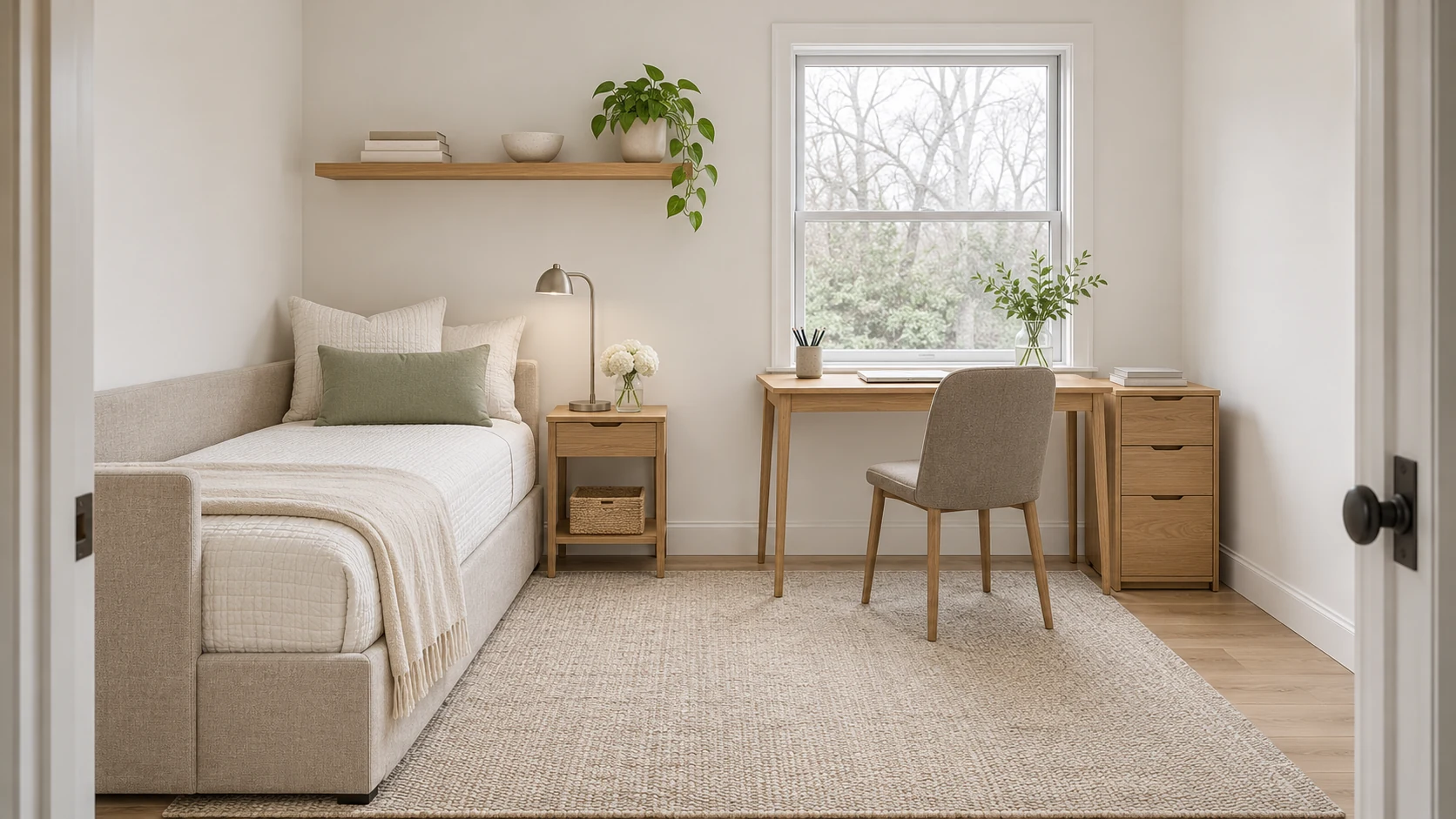
Use the drawers for spare sheets and towels so guests can find them without opening office storage. Measure how far the drawers extend and stop the rug short of that path if it catches the drawer fronts.
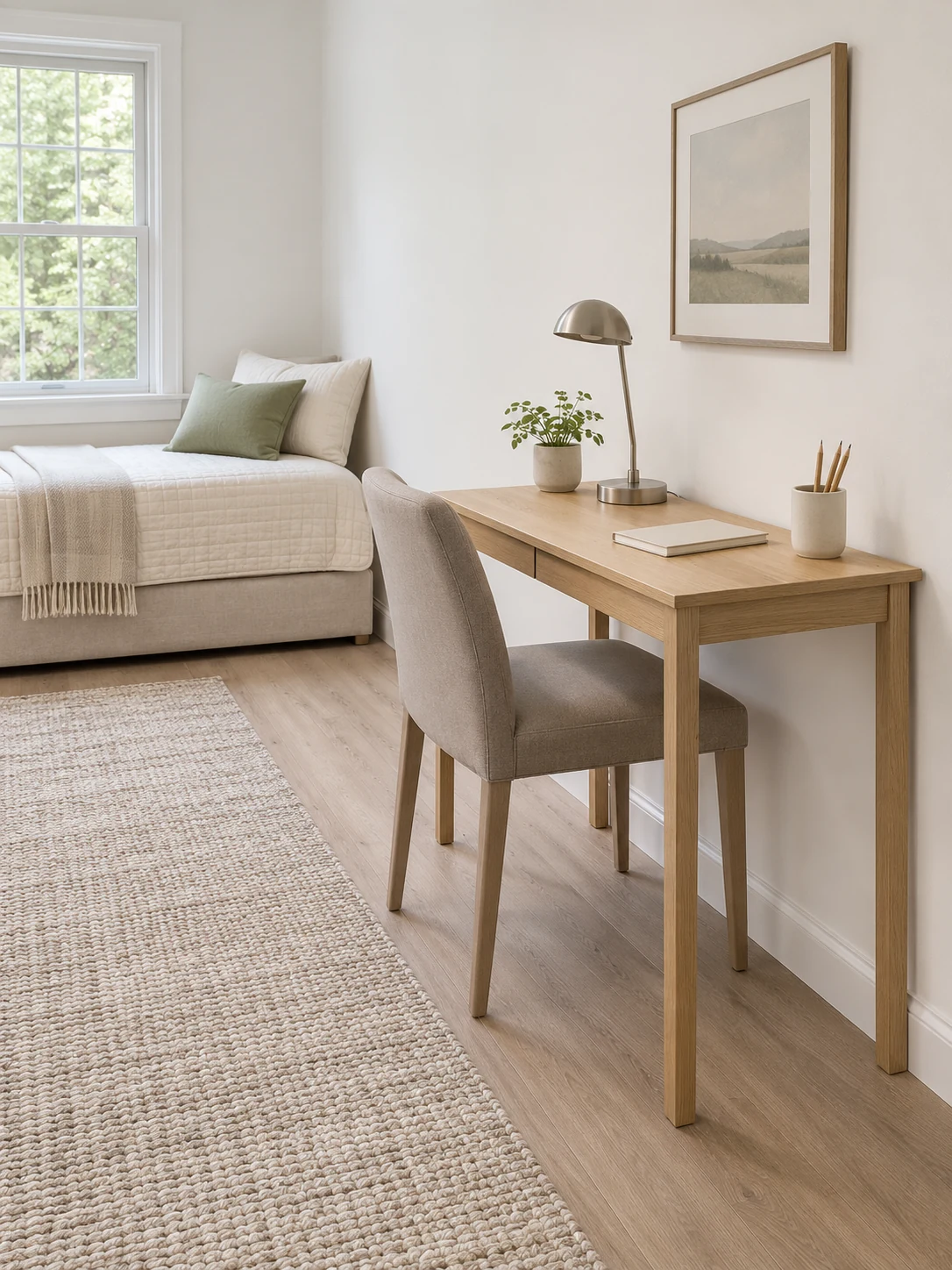
4. Fit a Slim Desk Against an Empty Wall
 Save
Measure the depth of your laptop, lamp, and any monitor stand before choosing a slim desk. An armless chair that slides under the top keeps the room easier to cross when the desk is idle.
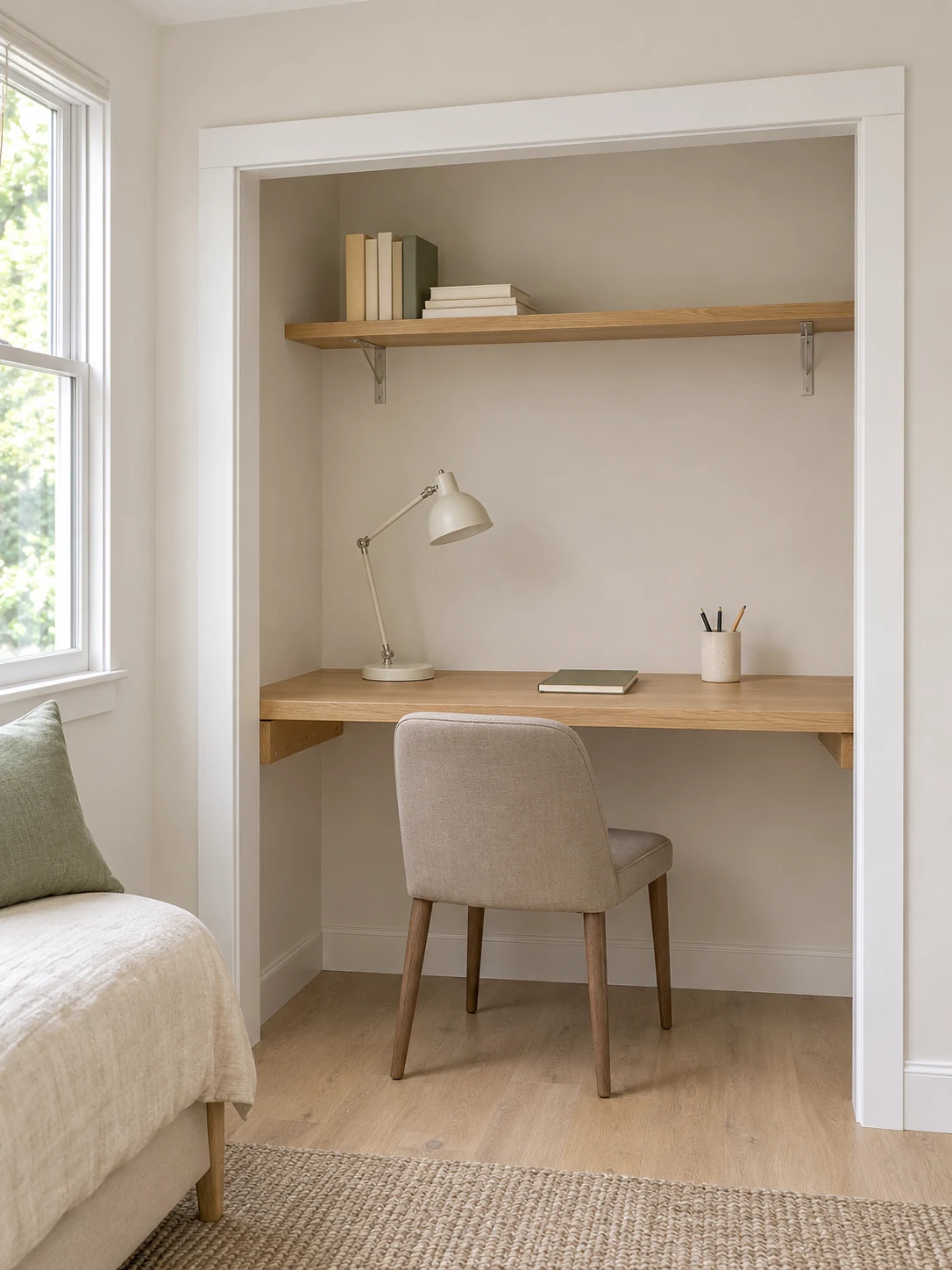
5. Turn a Closet Into a Compact Office
 Save
Check knee space and outlet access before fitting a desktop inside the closet. Have the supports anchored to suitable framing. If the closet also serves guests, keep a separate spot for hanging clothes or setting down luggage.
Make Room for Work and Storage
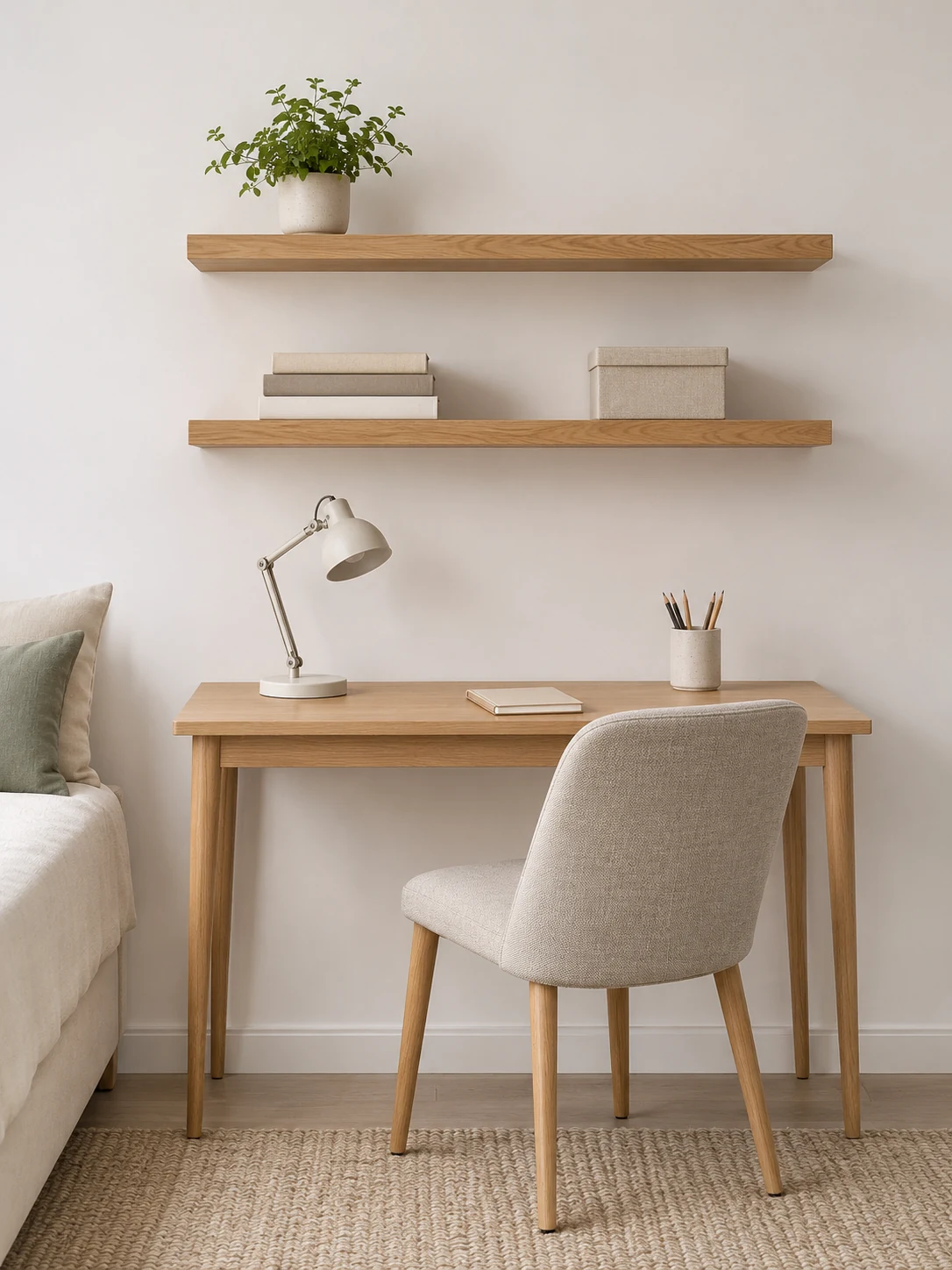
6. Add Floating Shelves Above the Desk
 Save
Place the lower shelf high enough to clear a raised laptop screen or an adjustable lamp. Use a small lidded box for everyday office supplies so the desktop can double as a place for guests to unpack.
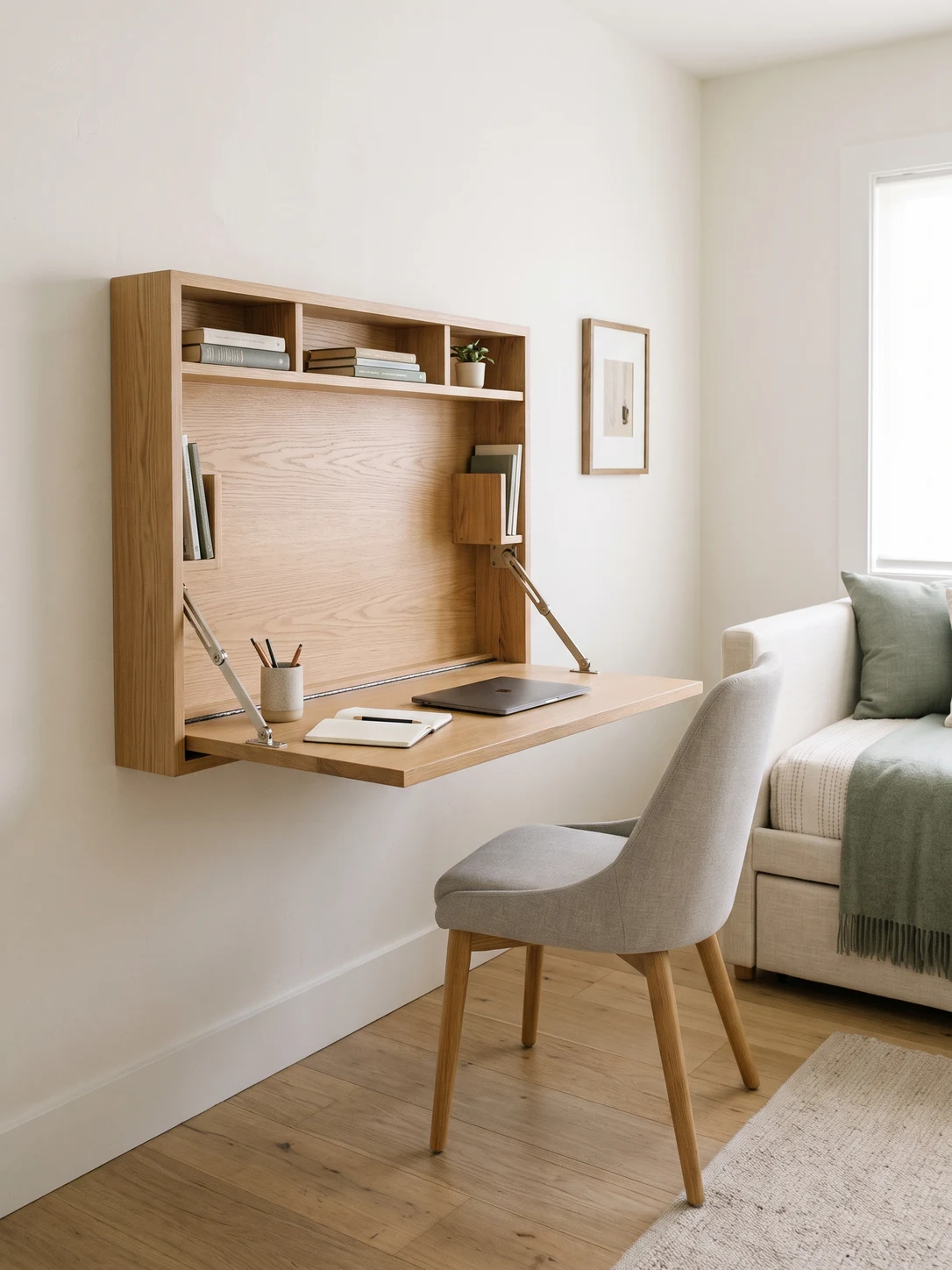
7. Use a Wall-Mounted Fold-Down Desk
 Save
Choose a fold-down desk rated for your equipment and mount it as the manufacturer specifies. Test the open desk with the chair pulled out. Store the laptop and cord separately so the panel can close after work.
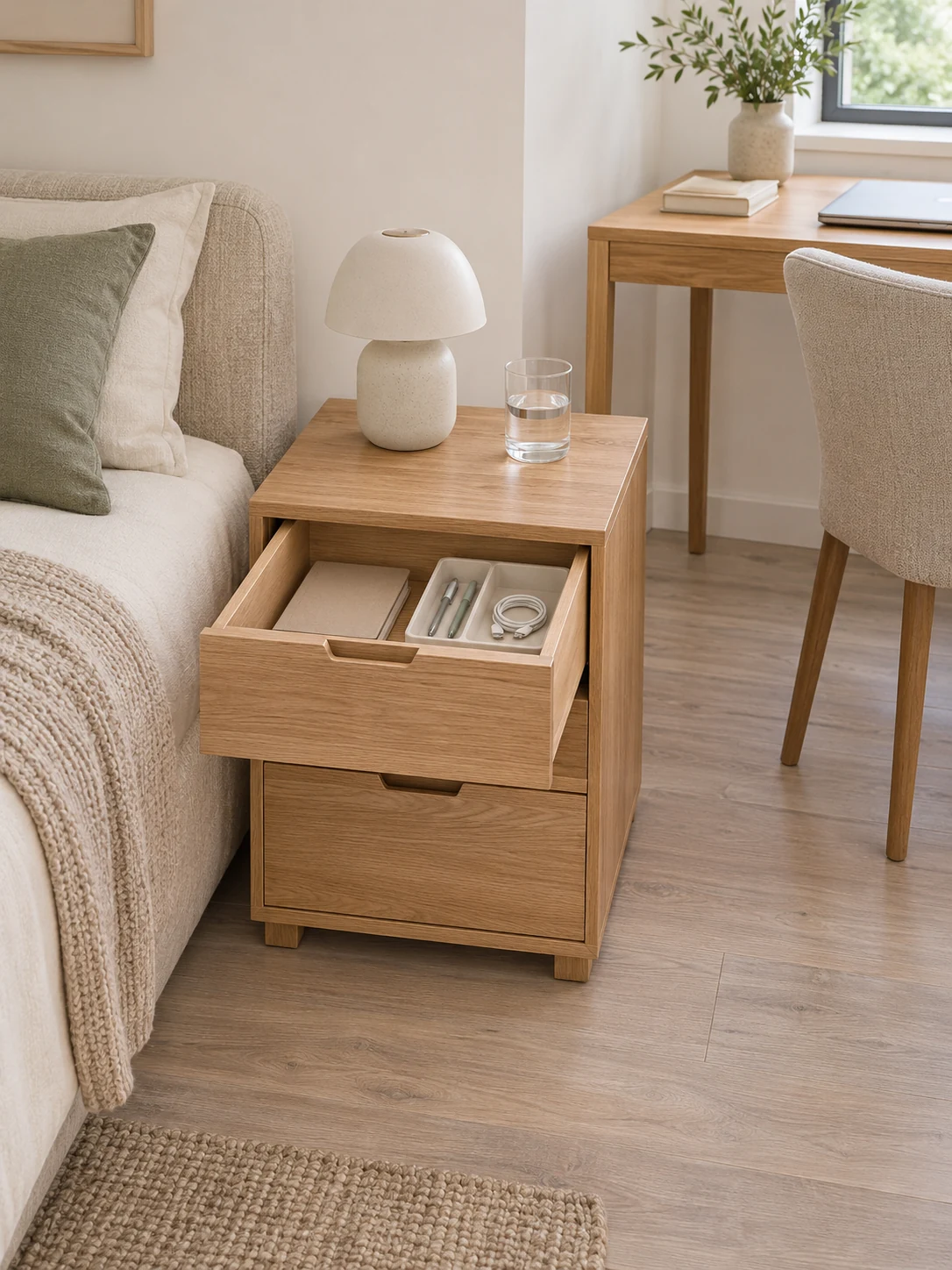
8. Choose a Nightstand That Doubles as Office Storage
 Save
Sort pens and cables into a shallow tray that fits below the drawer opening. Reserve a second drawer for guests and leave space on top beside the lamp for a glass of water or a phone.
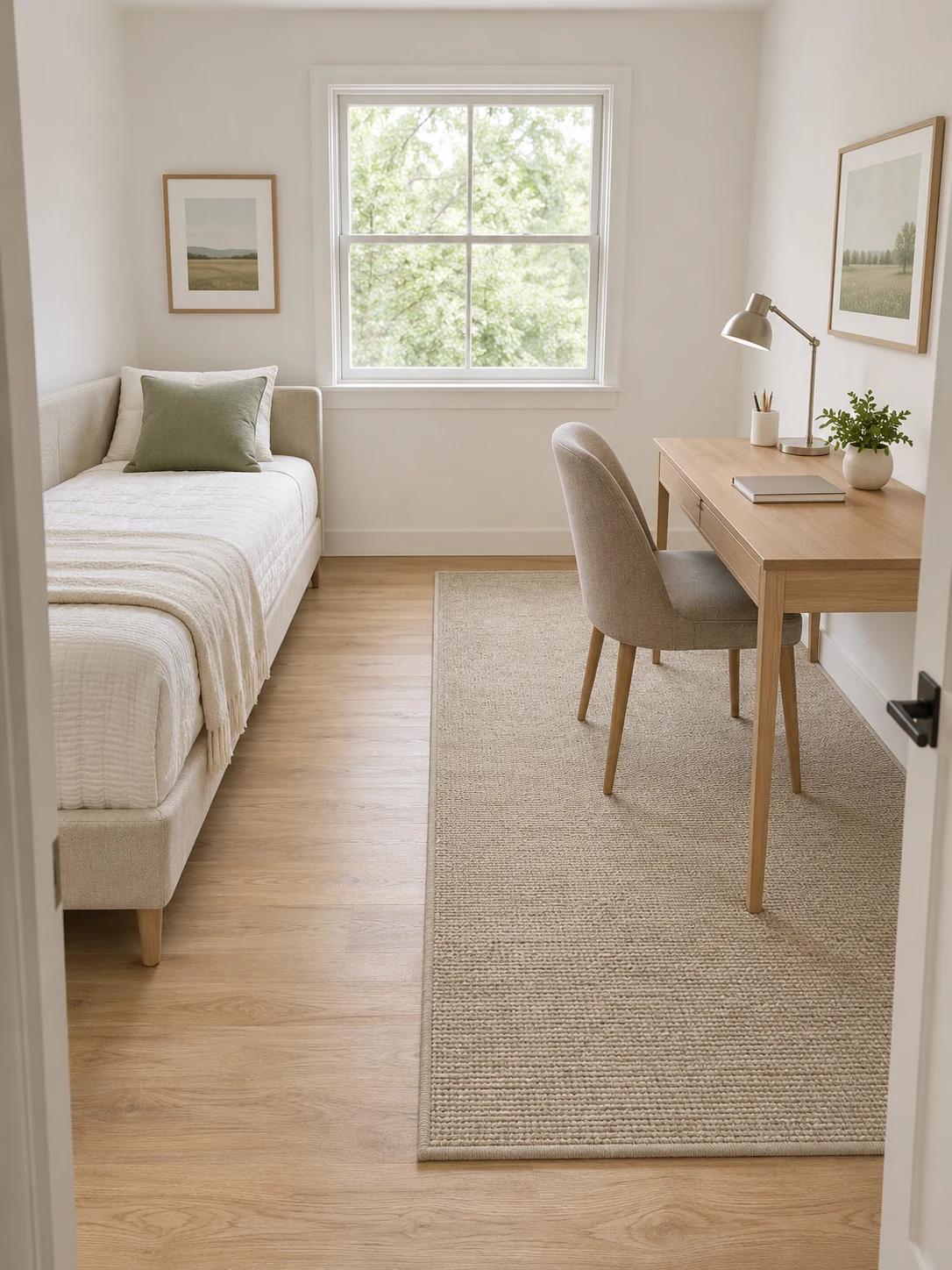
9. Separate Work and Sleep Zones With a Rug
 Save
Put a low-pile rug under the desk and chair to define the work area. Pull the chair back before settling on the rug size so its feet stay on the same surface when you sit down.
10. Add a Small Desk at the Foot of the Bed
 Save
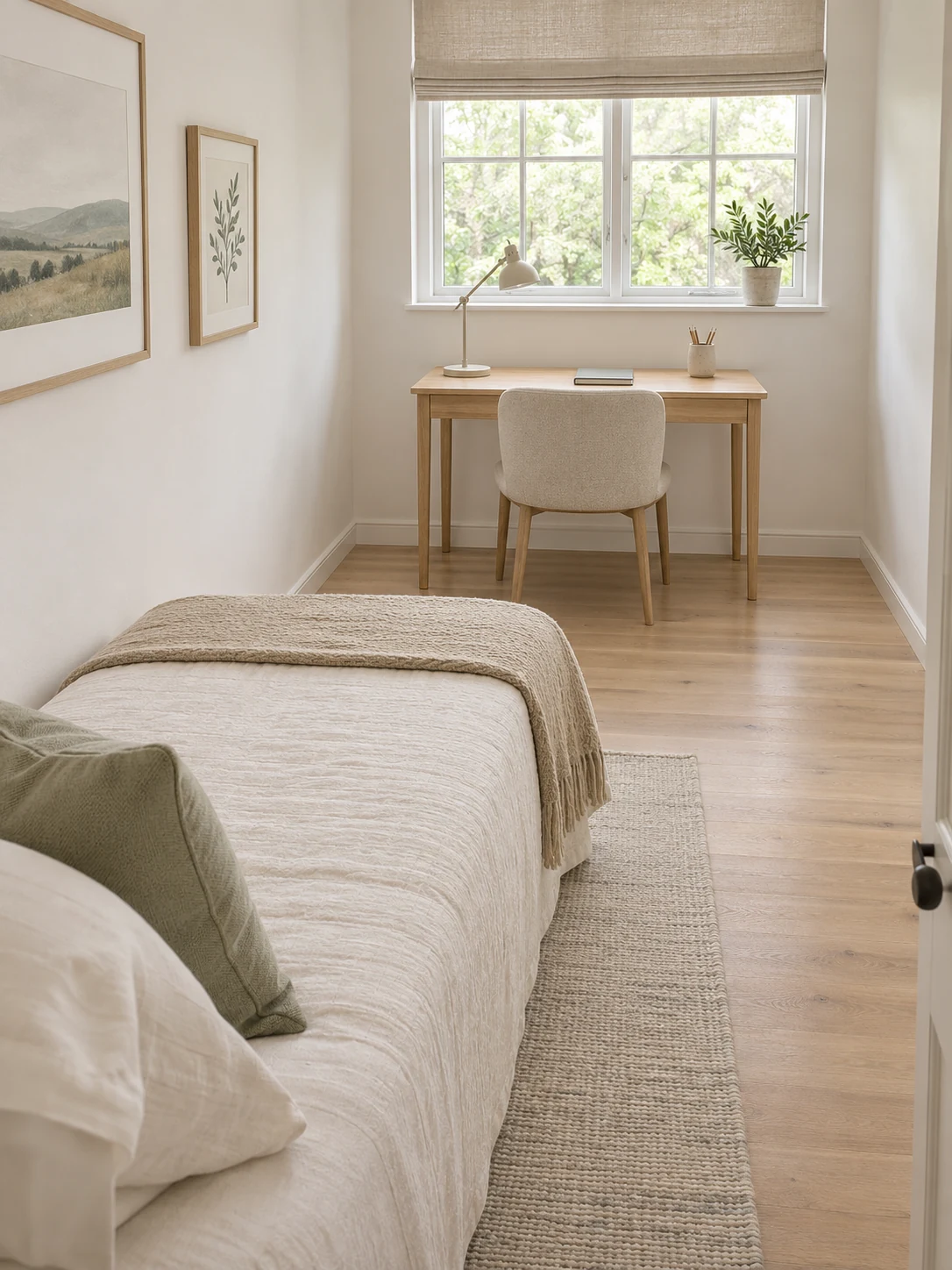
A narrow desk can fit on the wall beyond the foot of the bed. Tape out the desk and test it with the chair pulled back before buying. Keep a clear route along the accessible side of the bed.
Get the Room Ready for Guests
11. Use Closed Cabinets to Hide Office Clutter
 Save
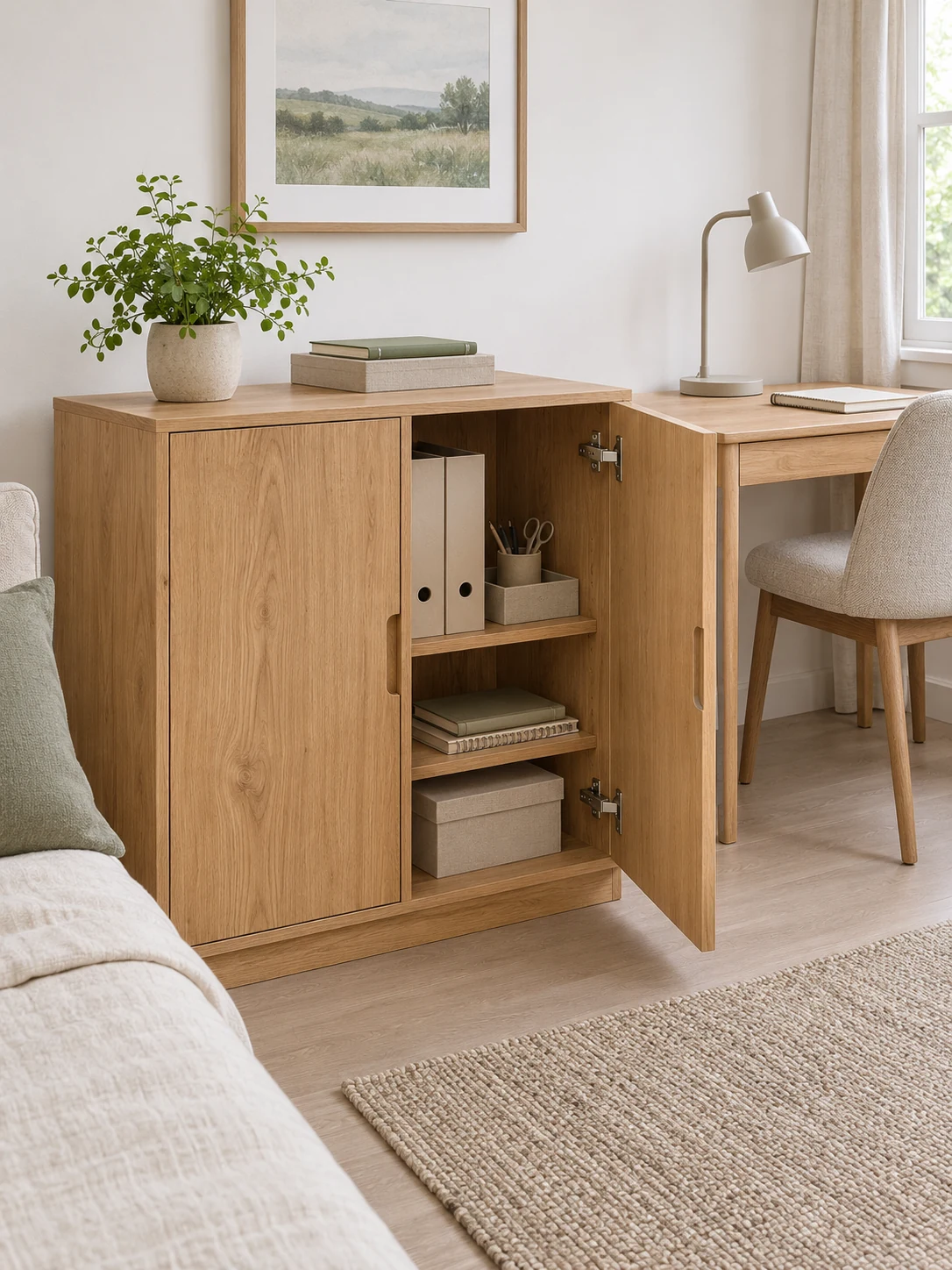
Place a shallow cabinet near the desk and swing its doors fully open before choosing its position. Keep work files together on one shelf and leave a separate shelf clear for guests to put away small items.
12. Choose Lighting That Works for Both Tasks
 Save
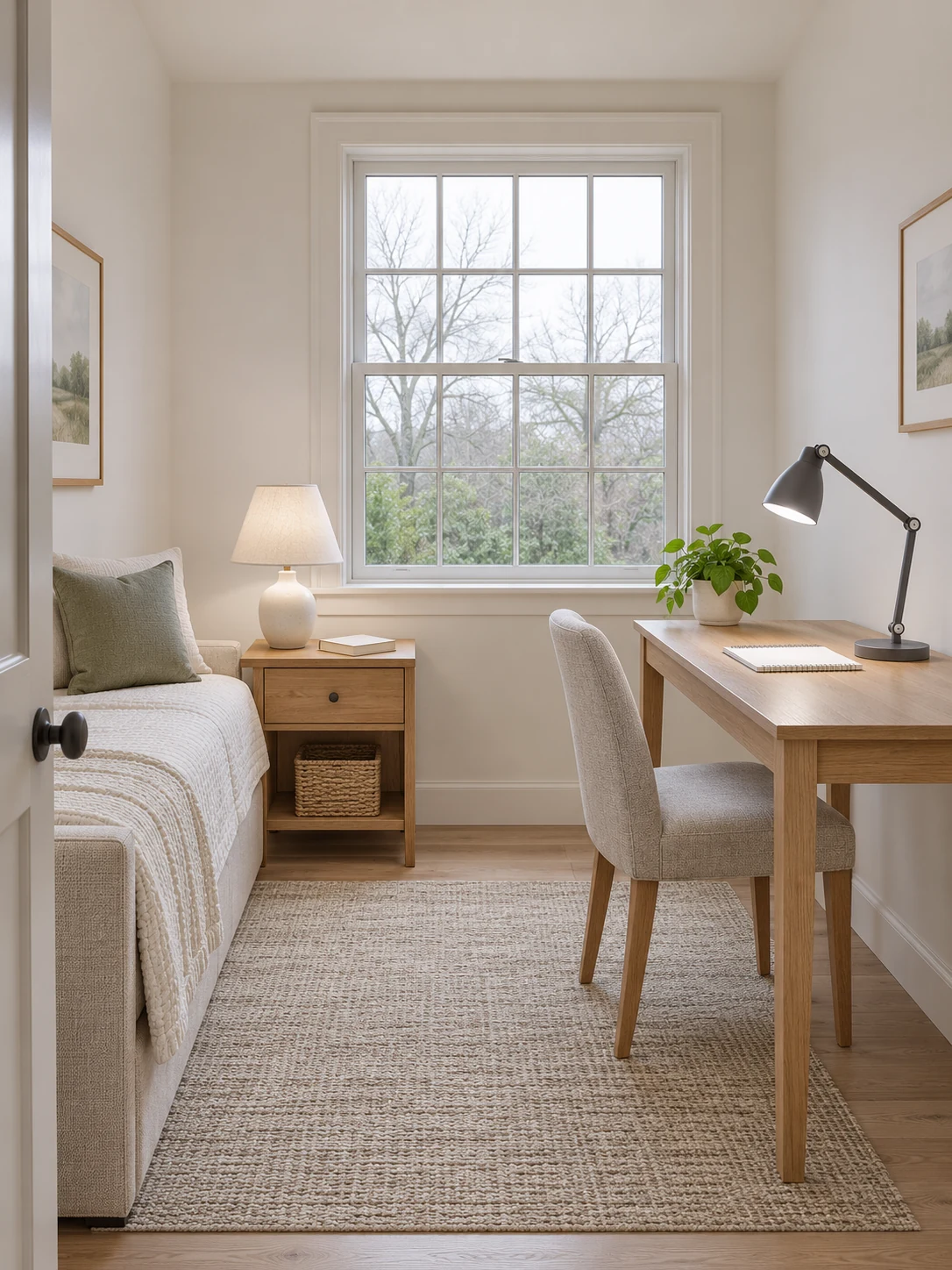
Use an adjustable task lamp for the desk and a separately switched lamp within reach of the bed. Angle the task lamp down onto your work so it does not shine directly into the sleeping area.
13. Add a Curtain to Conceal the Workspace
 Save
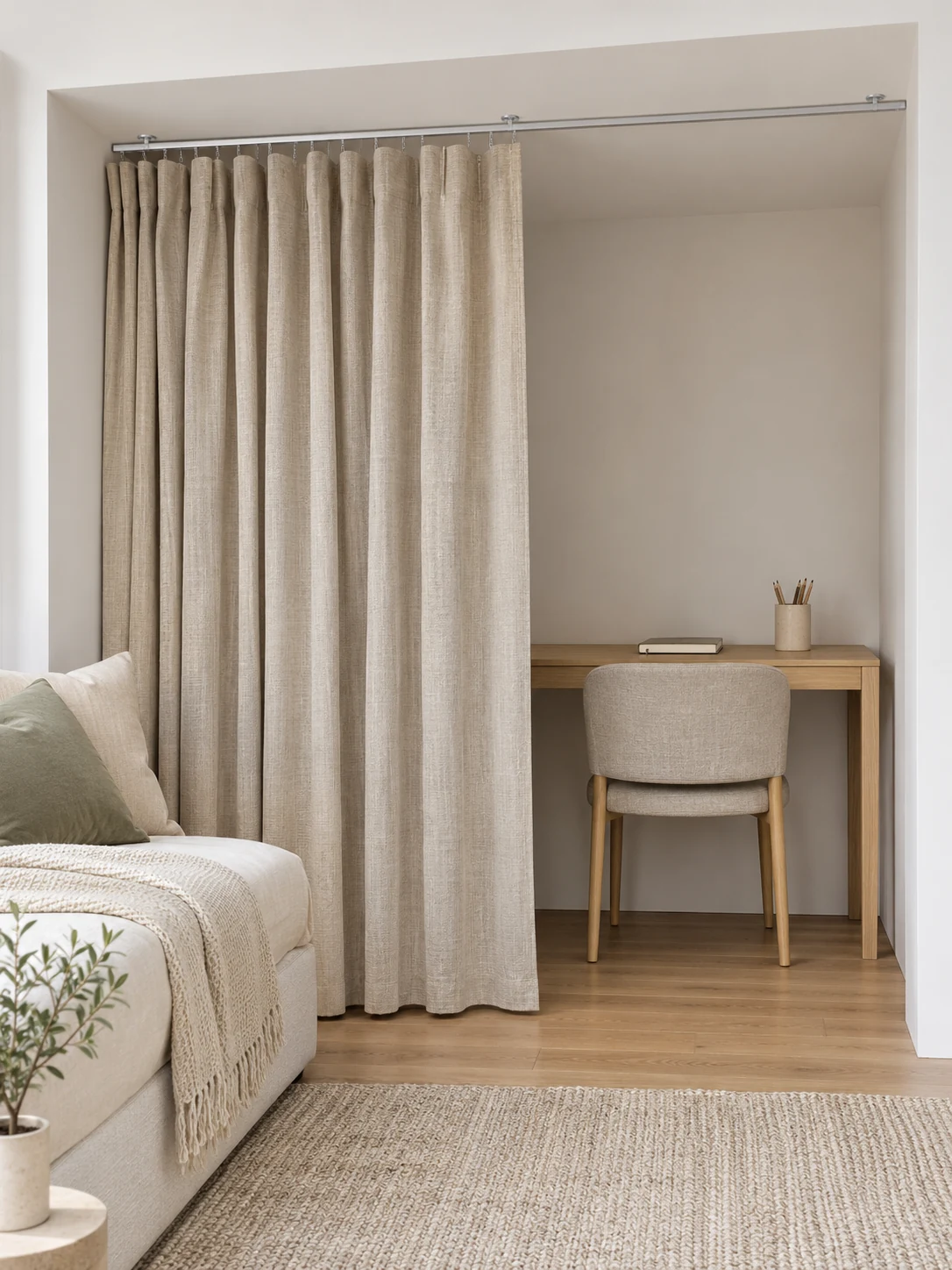
Use a track that spans the alcove and leaves room for the curtain to bunch at one side. Tuck the chair in and check that the fabric can travel freely past the desk and its hardware.
14. Keep Guest Essentials in One Dedicated Basket
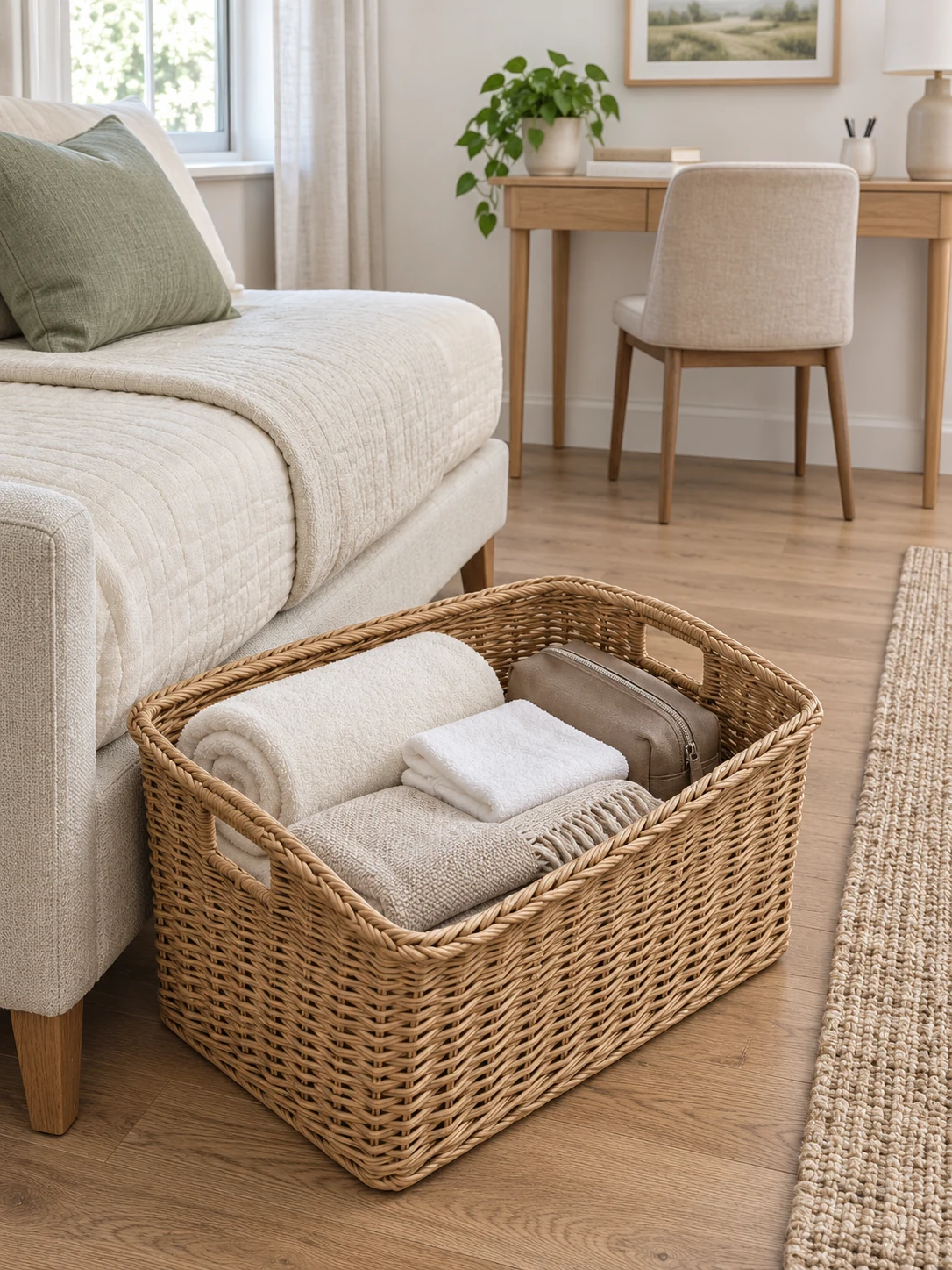 Save
Put a towel, spare throw, and small toiletry pouch in one basket so visitors can settle in without searching drawers. Park it beside the bed or under a shelf where it will stay out of the walking path.
15. Style the Room So Neither Function Takes Over
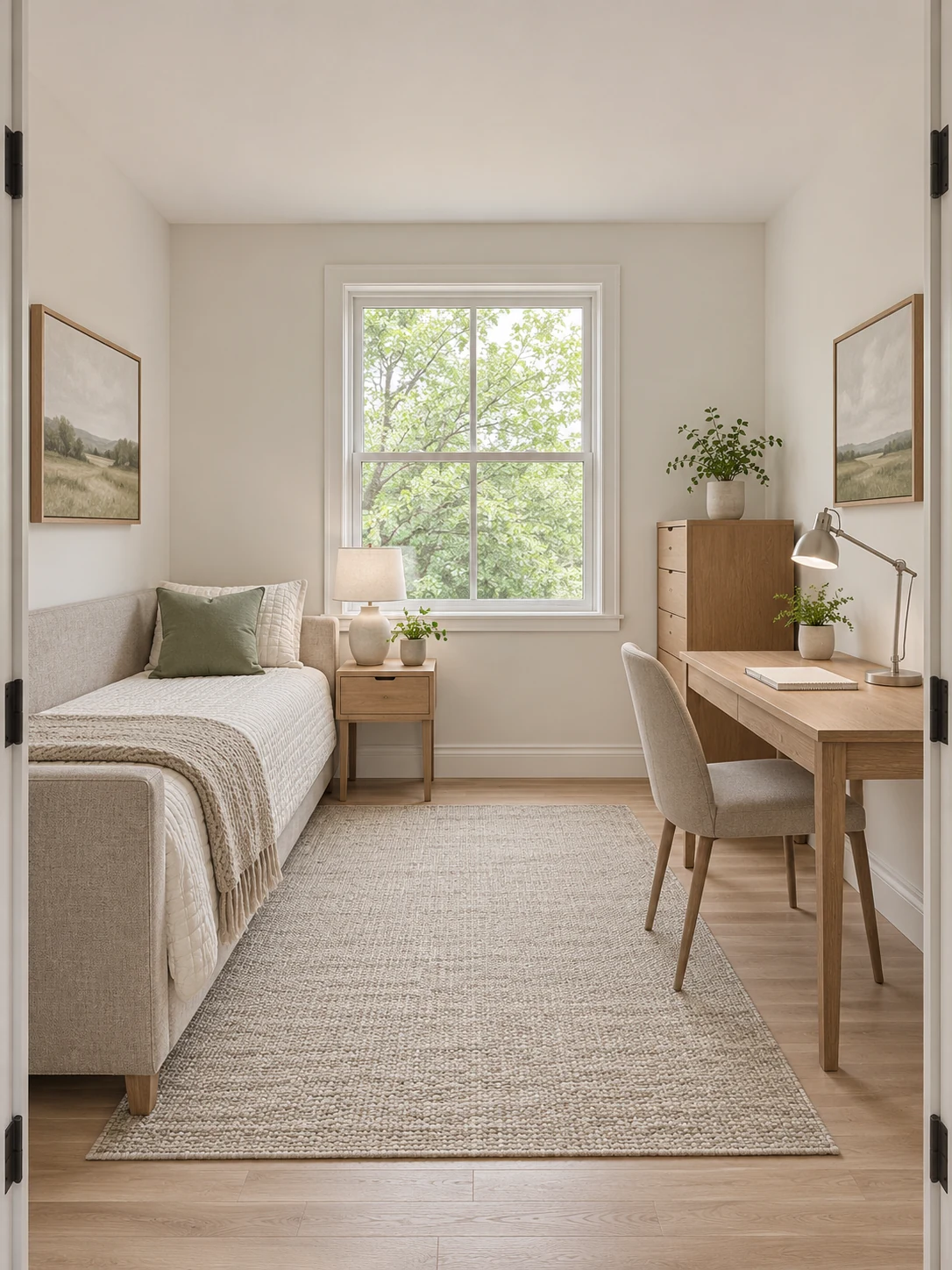 Save
Repeat one finish or color across the two zones, such as oak furniture or a sage pillow and desk accessory. Before guests arrive, clear the desk of work gear and leave enough surface for a bag or laptop.